Is September a Good Time to See the Northern Lights?
September is one of the best months for the northern lights in Rovaniemi — milder weather, active skies and fewer people. Here's what to expect and what to book.
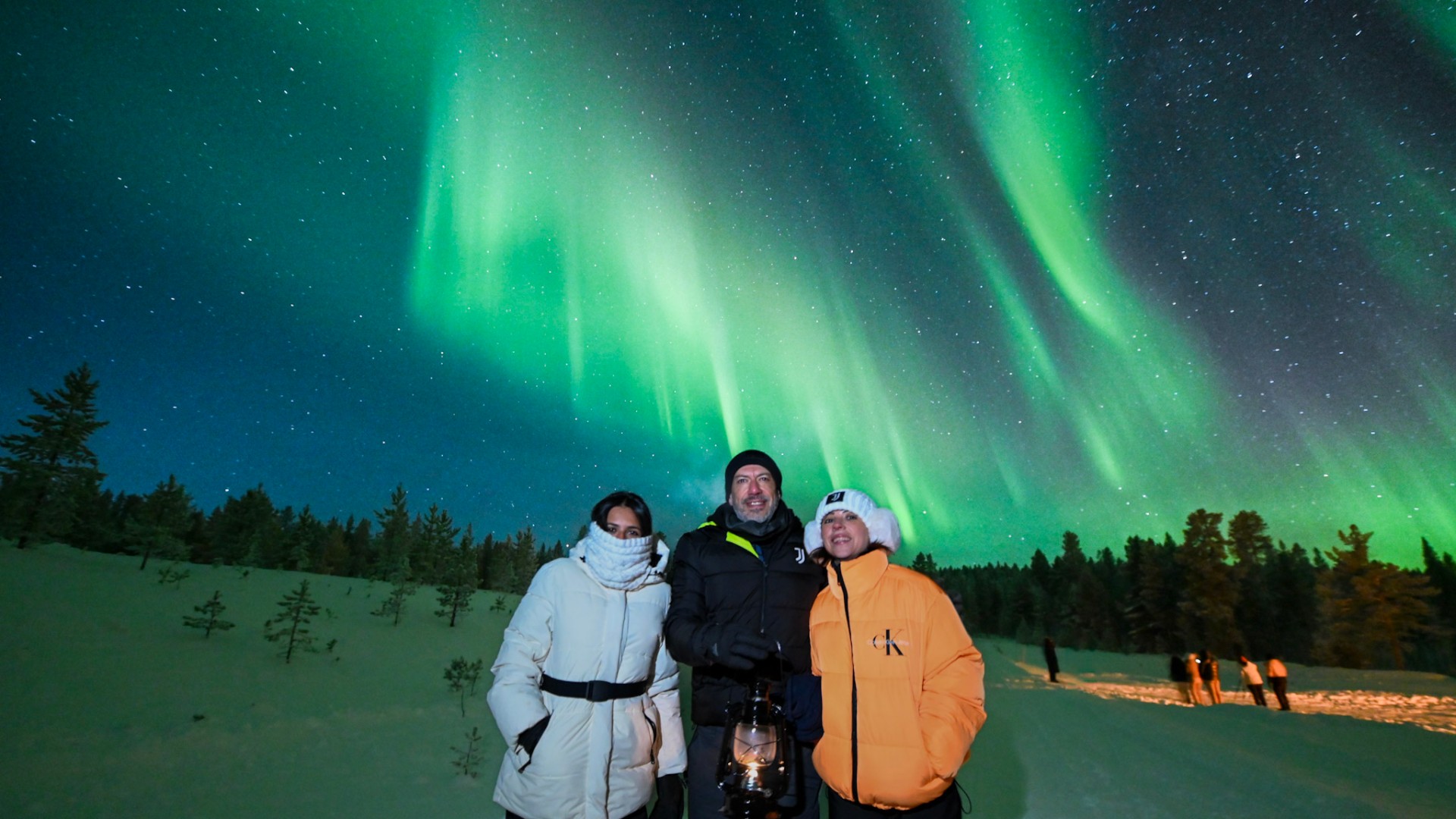
Short answer: yes, and it's better than most people think.
September gets written off. People picture Lapland in winter, deep snow, reindeer, Christmas, and assume the aurora needs all of that to show up. It doesn't. The lights are there in September exactly as they are in January. What changes is everything around them.
We run tours from late August through early April, and September is one of our favourite months to be out. Here's why, and here's what you should know before you book.
The skies are genuinely active
The aurora is caused by the sun, not the cold. Solar activity doesn't care what month it is.
What does matter is the equinox. Around the autumn equinox in late September, the Earth's magnetic field lines up with the solar wind in a way that makes geomagnetic storms more likely. This is a real, measured effect, the same thing happens around the spring equinox in March. Statistically, the weeks either side of late September are among the most active of the entire year.
So the raw ingredient is there. Often more of it than in midwinter.
It's dark enough
This is the one real limitation, and it's worth being straight about.
In early September, Rovaniemi still has long evenings. Proper darkness doesn't arrive until quite late, so tours start later and the window is narrower. By the end of the month that's gone, nights are long, dark, and the window is wide open.
If you're coming in the first week of September, you're getting a shorter hunting window than you would in October. From roughly the second week onwards, it stops being a factor.
The weather is on your side
This is the part people don't expect, and it's the strongest argument for September.
Clouds are the real enemy of aurora hunting. Not the sun, not the KP index, clouds. You can have a major geomagnetic storm overhead and see nothing at all because there's a blanket of grey between you and it.
September in Lapland is milder and often clearer than the depths of winter. Temperatures sit around a few degrees above freezing rather than twenty below. That means:
- You can stand outside comfortably for hours instead of minutes
- Camera batteries last
- Your hands work well enough to actually use a camera
- Nobody in your group is quietly miserable and asking to go back
In January it can be -25°C. People underestimate what that does to an evening spent standing still in a field.
There are fewer people
September is shoulder season. Rovaniemi in December is extremely busy, hotels are full, prices climb steeply, and the popular aurora viewing spots have several vehicles parked at them.
In September you get the place closer to how it actually is. Quieter roads, easier availability, and viewing spots where it's just your group. Hotel rates are a fraction of what they are at Christmas.
If the aurora is your main reason for coming, rather than Santa Claus Village and the Christmas side of Rovaniemi, September gives you more of what you came for, for less.
What you won't get
Being honest about this, because it's the reason to come in December instead:
- No deep snow. Early September is autumn, not winter. The ground is usually bare. Snow generally arrives in October.
- No husky or reindeer sleighs. Those need snow. Wheeled versions run at some farms, but it isn't the same.
- Less of the Christmas atmosphere. Santa Claus Village is open year-round, but December is when Rovaniemi feels like the postcard.
What September does have is ruska, the autumn colours. The forests turn red, orange and gold, and it's genuinely spectacular. Most visitors have never heard of it. You get aurora at night and that during the day.
How to actually see them
Regardless of the month, two things decide whether you go home having seen the northern lights.
Come for more than one night. This is the single biggest factor and it's the one most people get wrong. One tour is a coin toss against the weather. Three nights running is not. Clouds move; over three nights you will almost certainly get a clear window. We saw the aurora on 95% of our tours last season, and multiple nights out is a large part of why that number is what it is.
Be willing to move. A fixed viewing spot means you're stuck with whatever sky is above it. We drive, 13 locations across Finnish Lapland, six in Sweden, and into Norway when the forecast demands it. If Rovaniemi is clouded in, we go find somewhere that isn't. That's the whole job.
So, should you come in September?
Come in September if you want the aurora with mild weather, clear skies, autumn colours and no crowds, and you don't mind the absence of snow.
Come in December or January if you want the full winter, snow, huskies, reindeer, Christmas, and you accept colder nights and a busier town.
Both work. September is just the one nobody tells you about.
Every tour we run comes with a 100% money-back guarantee. If you go out with us and the aurora doesn't appear, you get the full amount back. Not a credit, not a repeat tour, the money.
Our September dates are open now.