Month by month
Northern Lights in Rovaniemi in March
March is the best month for the Northern Lights in Rovaniemi: equinox activity, the clearest skies of winter, the deepest snow and long days. The numbers, and what to book before the season ends.
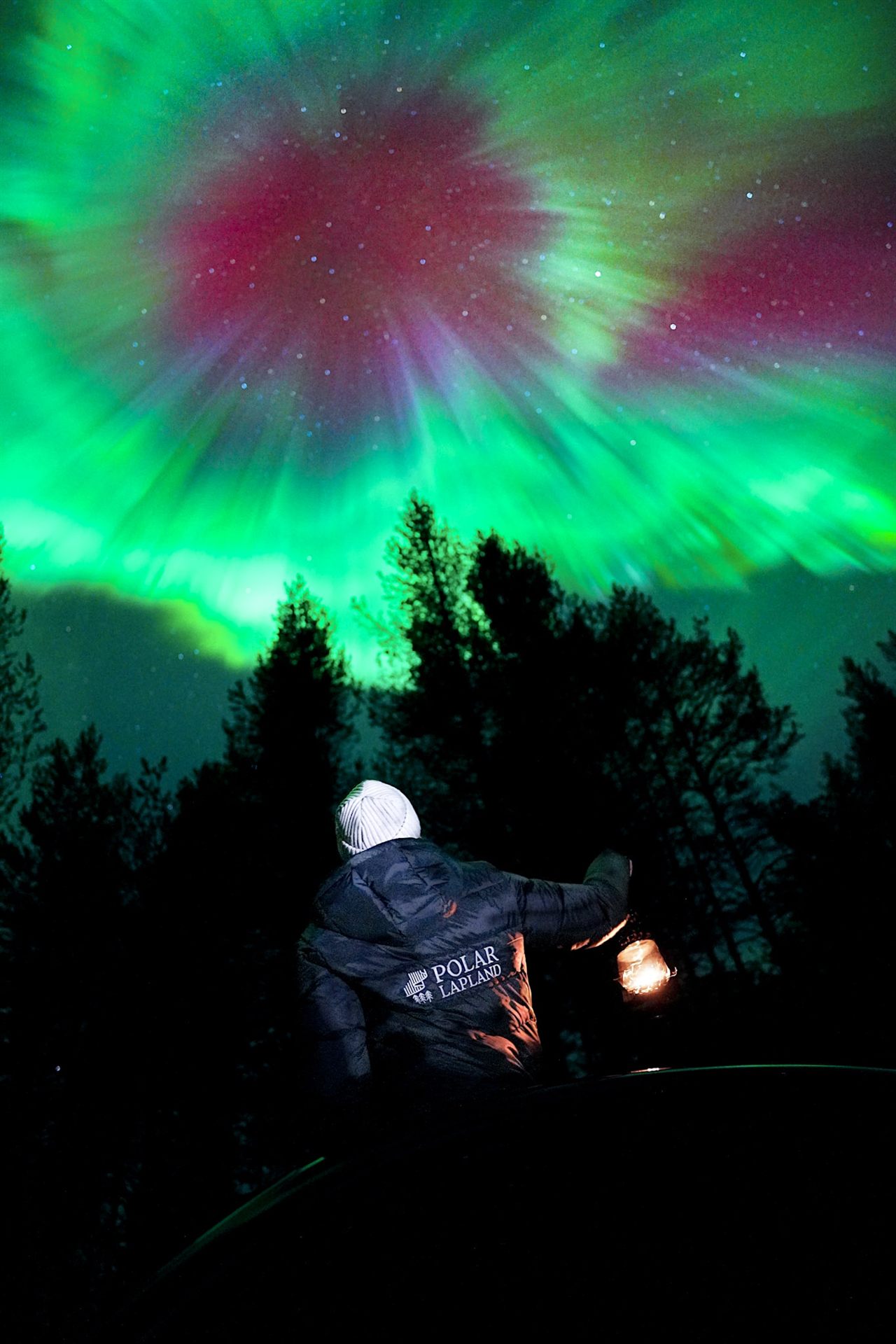
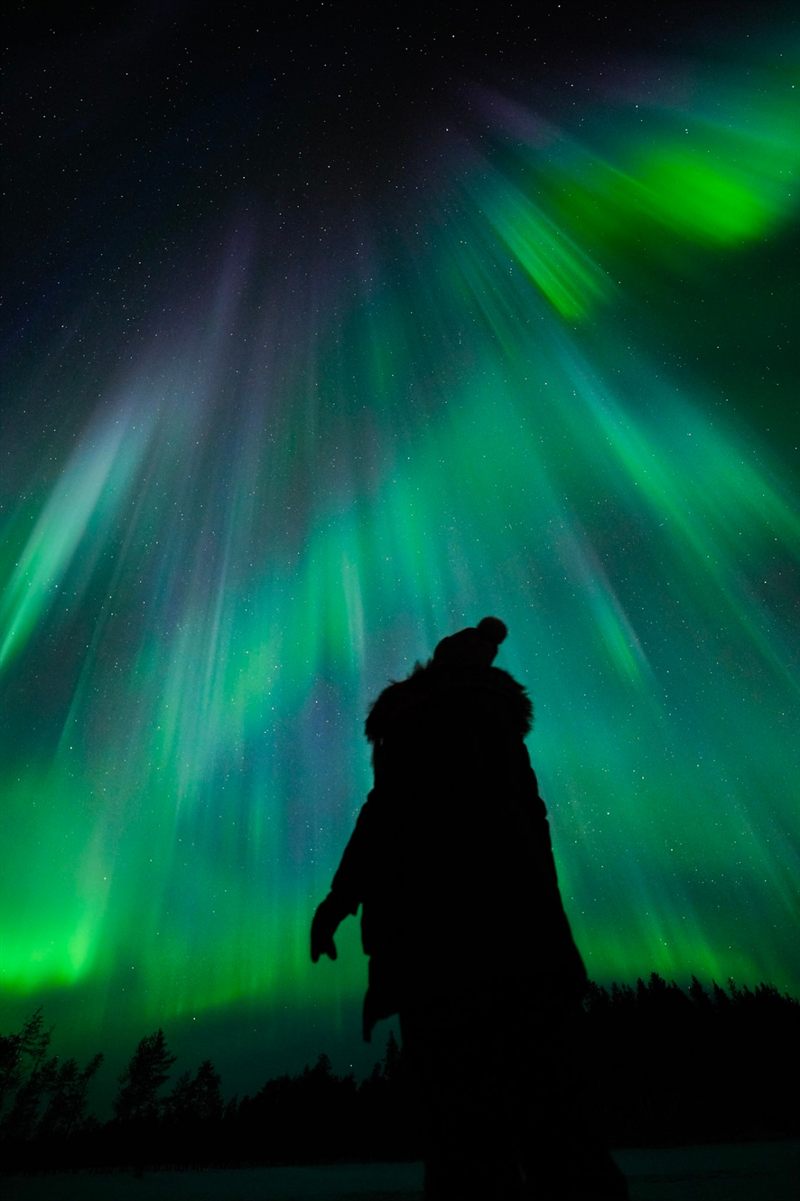
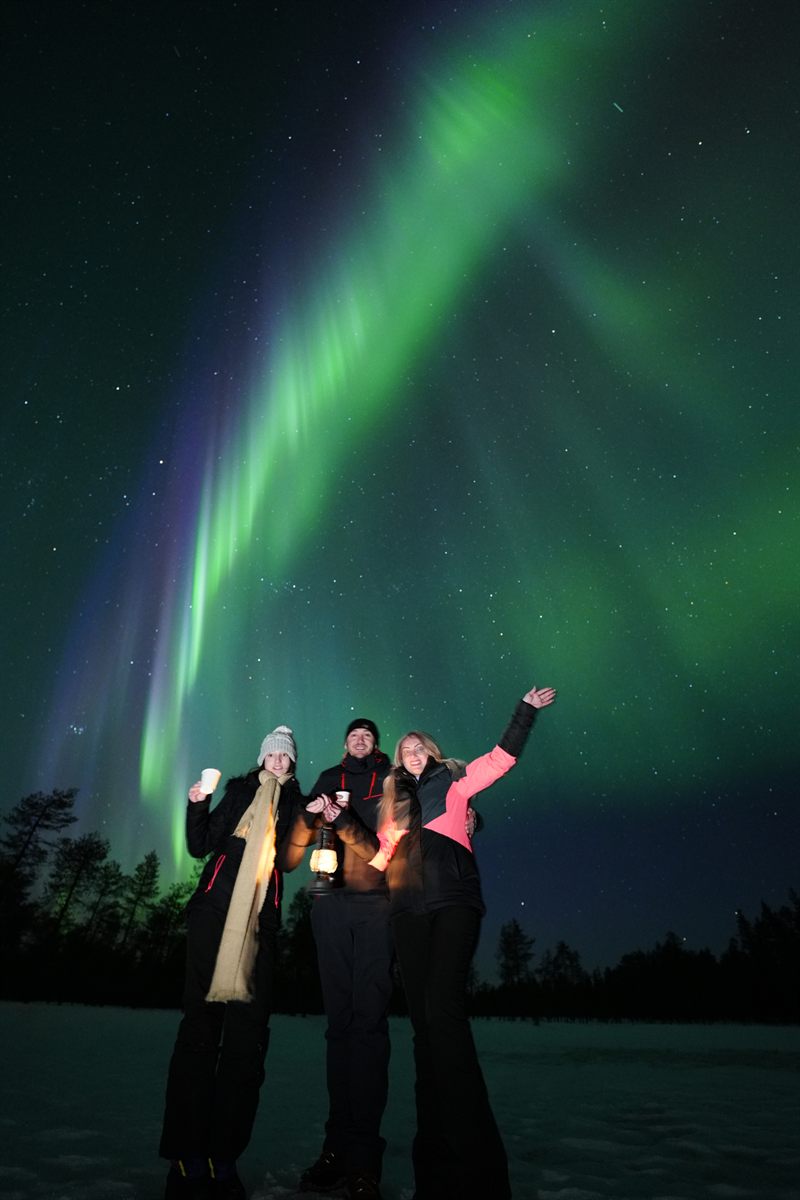
Short answer: March is the best month of the year to see the Northern Lights in Rovaniemi. The spring equinox boosts geomagnetic activity, the skies are the clearest of the winter, the snow is at its deepest, and the days are long enough to fill with huskies, snowmobiles and national parks. The Finnish Meteorological Institute names March and early April as the best time for auroras in northern Finland, and our own logs agree: March is when we drive least and see most.
The one thing March takes away is darkness: full night shrinks from about 6 hours mid-month to about 4 hours by the end. That is still plenty, because the aurora typically peaks around midnight.
March in Rovaniemi at a glance
| Fact | March |
|---|---|
| Daylight (mid-month) | About 11.5 hours mid-month, 13 hours by the end |
| Sunrise / sunset (mid-month) | About 06:39 to 18:13 |
| Full darkness for aurora (sun more than 18° below the horizon) | About 6 hours mid-month, 4 hours by late March |
| Average temperature, 24 h | −5.6 °C |
| Average night low | −9.1 °C |
| Record low | −27.5 °C |
| Snow | Deepest of the year, around 75 cm on open ground |
| Aurora odds (our scale) | Excellent |
| Typical cloud | Lightest of the winter |
| Our average chase distance | About 40 km each way |
| Crowds and prices | Busy in the first week (school holidays), then calm; season ends mid-April |
Sources: Finnish Meteorological Institute, temperature statistics 1991-2020 (Rovaniemi airport); Finnish Meteorological Institute, snow statistics; Polar Lapland tour logs. Sunrise, sunset and darkness figures are calculated for Rovaniemi (66.5°N) with standard solar formulas and rounded; they shift by a few minutes across the month.
What March is actually like
March is bright. Mid-month the sun rises at about 06:39 and sets around 18:13, and the snow reflects so much light that you will want sunglasses on daytime tours. Temperatures ease: the FMI 1991-2020 normals give a March daily mean of −5.6 °C and an average night low of −9.1 °C, though clear nights can still drop below −20 °C. The snowpack peaks in mid-March at around 75 cm on open ground, the deepest of the year.
Aurora nights start later than in midwinter. Full darkness falls at about 21:00 mid-month, so our March tours leave town in the evening and concentrate on the hours around midnight, when displays are most likely.
Why March has the best odds
Two things line up. First, the equinox effect: around mid-March and mid-September the angle between the solar wind and Earth's magnetic field is most favourable for funnelling particles into the polar regions, a well-documented pattern known as the Russell-McPherron effect. Second, cloud: March brings the lightest cloud cover of the winter to Rovaniemi. Our average chase distance in March is about 40 km, a third of what it is in December.
Solar Cycle 25 reached its maximum in 2024-2025, and the years just after a maximum are historically among the most active for geomagnetic storms. Put together, March 2027 is as good a bet as any aurora hunter could ask for. Check tonight's conditions on our live aurora forecast page.
What to book in March
- An aurora hunt on the first night, and keep a second night free. The small-group tour (max 8, 4-12 hours) suits March best because a longer hunt makes the most of the shorter dark window.
- Long daytime tours. With 11-13 hours of daylight, the full-day Riisitunturi and Korouoma trips are at their most enjoyable, and you are back in time for the aurora.
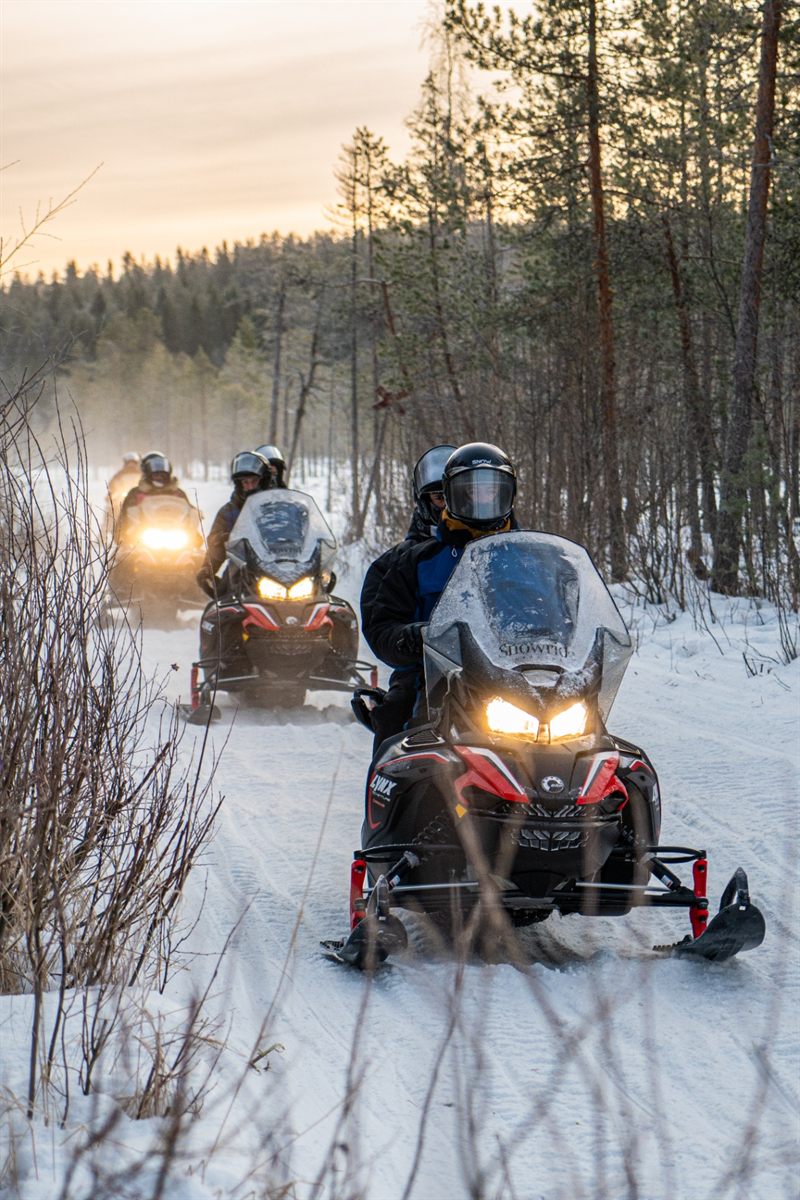
- Snow activities in sunshine. The husky safari, snowmobile tour and reindeer visit all run on a deep, firm snowpack.
- The glass igloo sauna. The private igloo sauna evening pairs naturally with a late March sky.
The end of the season
Clocks go forward on the last Sunday of March, and after that full darkness shrinks quickly. By mid-April there is no astronomical darkness left in Rovaniemi at all, only a few hours of deep twilight, and our aurora tours stop for the summer. If you are travelling in April, come in the first half and expect displays to be visible only around midnight. From late August the season starts again; see our September guide.
Whichever tour you pick, every Polar Lapland aurora hunt comes with the 100% money-back Aurora Guarantee: no photo of you with the Northern Lights, no payment.
Frequently Asked Questions
Is March the best month to see the Northern Lights in Rovaniemi?
Yes, together with September. March combines the equinox rise in geomagnetic activity with the clearest skies of the winter. The Finnish Meteorological Institute names March and early April as the best time for auroras in northern Finland, and our average chase distance drops to about 40 km.
Is it still dark enough in March to see the aurora?
Yes. Mid-March has about 6 hours of full darkness, from roughly 21:00 to 03:00, and the aurora typically peaks around midnight. By late March the window is about 4 hours, and by mid-April it closes for the summer.
How cold is Rovaniemi in March?
Milder than midwinter: the FMI 1991-2020 normals give a daily mean of −5.6 °C and an average night low of −9.1 °C. Clear nights can still fall below −20 °C, so dress for winter on an aurora tour.
Is there snow in Rovaniemi in March?
March has the deepest snow of the year, peaking mid-month at around 75 cm on open ground according to FMI snow statistics. Every snow activity runs, and the long days make full-day trips comfortable.
When do Northern Lights tours stop for the season?
Our aurora tours run from late August to mid-April. After mid-April Rovaniemi has no full darkness until the season restarts in late August.